
Free checklist

The First Assessment Checklist

19 steps for your first session with an MSK patient, from the first question to the treatment decision, each with one line on why it matters and what it changes. Built to upgrade your SOAP notes, not replace them.

  • Free PDF, 3 pages
  • Red flag screen included
  • Use it on your next patient

Get the free checklist

Free PDF, 3 pages. It lands in your inbox within a minute. We never share your email. Privacy policy.

“I don't ask that question. And if I did, I wouldn't know what to do with the answer.”

If that sounds familiar, you're not missing knowledge. You're missing the link between the question and the decision. This checklist puts that link on paper.

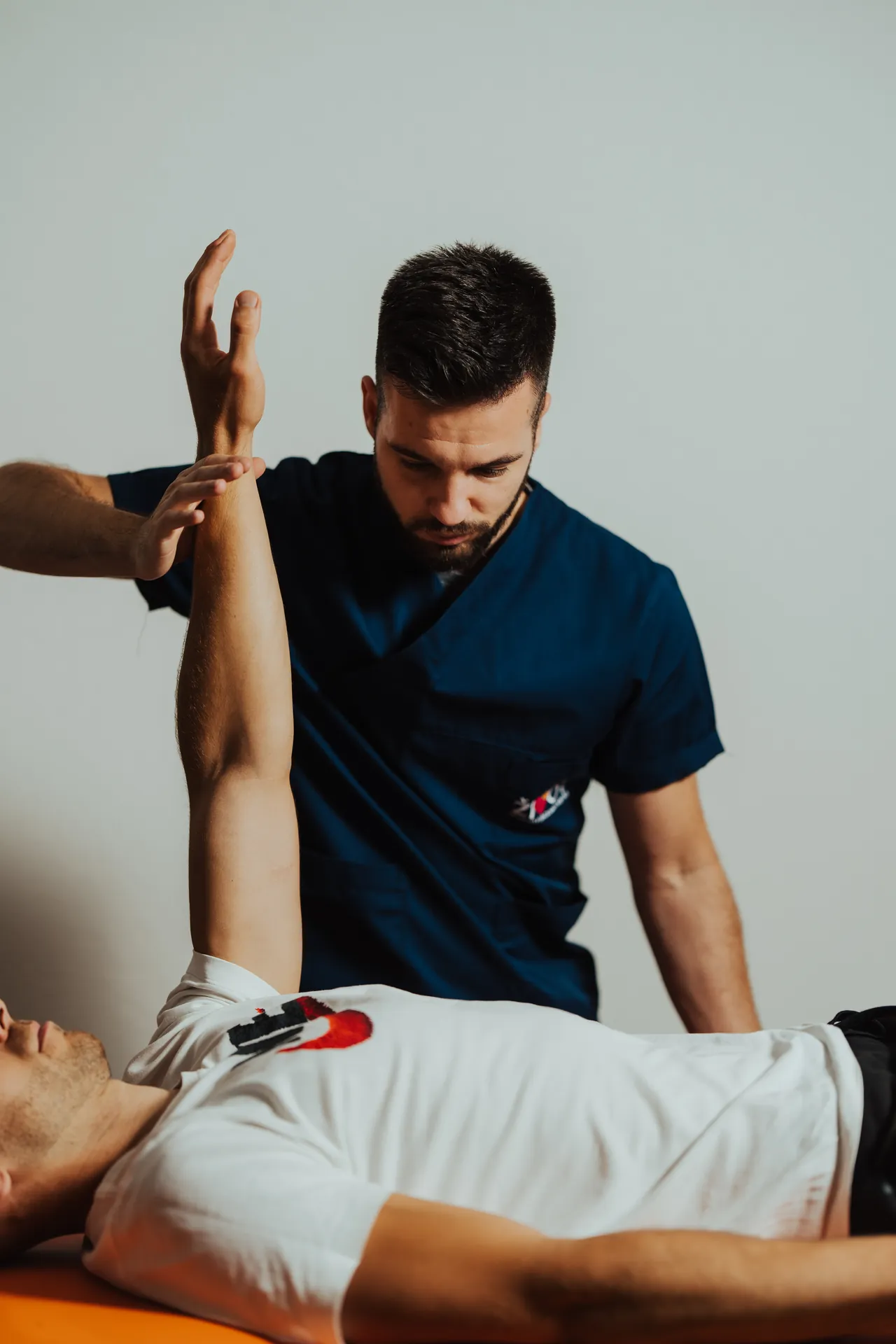
A physiotherapist guiding the raised arm of a patient lying on a treatment table
A shoulder assessment in clinic

What's inside

Every step of your first session with an MSK patient, from history to treatment decision, and why it matters. Red flag screen included.

Page 1: history questions, each with the reason behind itPage 2: red flag screen, hypotheses and decisionsPage 3: quick reference table and common mistakes

Send me the checklist

  1. Page 1 · Step 1 (S)

    10 history questions with the reason behind each so every answer moves you closer to a hypothesis instead of filling the notes.

    From the checklistAsk the patient to point to the pain with one finger. One finger usually means a local problem. The whole hand means think referred pain or a wider driver.

  2. Page 2 · Step 2 (O)

    A red flag screen (fracture, infection, malignancy, cauda equina, DVT, vascular), so you know when to stop and refer.

    From the checklistMalignancy: history of cancer, unexplained weight loss, constant pain unchanged by position or rest.

  3. Page 2 · Step 3 (A/P)

    The finding → structure → treatment chain so you can explain to the patient, in two sentences, what's wrong and why you're treating it this way.

    From the checklistMovement X reproduced the pain → structure Y is the likely source → so we load, unload or mobilise Y in this way.

  4. Page 2 · Step 3 (A/P)

    The continue / change / refer rule for every review session.

  5. Page 3

    A quick-reference table and the 4 most common mistakes to keep next to your notes until the reasoning becomes automatic.

Who it’s for

For you if

  • You're in your first years of practice or final year of study.
  • You work without day-to-day supervision, so nobody checks your reasoning.
  • You finish first sessions unsure what your findings actually mean.

Not for you if

  • You're looking for a new hands-on technique to add.
  • You want a fixed protocol rather than a way of thinking. This is about how you reason during an assessment, not what you do with your hands.

What changes in your first session

Without itWith the checklist
You ask every question on the form, and the answers end up in the notes.You know what each answer changes, so it ends up in the decision.
You examine everything "just in case".You start from 2–3 hypotheses and know what you are looking for.
You give the treatment you always give.You can write the chain: finding → structure → treatment.
You can't tell whether the session helped.You recheck the comparable sign before the patient leaves.

From physios who learnt to reason, not guess

Built from 10 years in clinic and mentoring 40+ physiotherapists. 17 of them share their experience on video.

“A person tells you their symptoms, and you're instantly down to 2 or 3 diagnoses.”
Mentorship graduate, message to Franjo
Original WhatsApp message in CroatianOriginal message, Croatian · open full size
Read the full translation

“Everything is so much simpler now. A person comes in and tells you their symptoms, and you're instantly down to 2 or 3 diagnoses and can rule out everything else, from orthopaedics to compressions.”

“Told he needed surgery. I tested the discs: nothing. It was the middle cluneal nerve.”
Mentorship graduate, chat with Franjo
Original WhatsApp chat in CroatianOriginal message, Croatian · open full size
Read the full translation

“Mentee: “A dentist came in, said he'd been told he needs surgery. I test the discs: nothing.” Franjo: “And what was it in the end?” Mentee: “Middle cluneal nerve. Compression. I test the sacroiliac joint, that's not the pain. When he got up, he said: ‘I feel like I did 20 years ago.’””

“I was so focused on the nerve that the joint mechanics would never have crossed my mind.”
Mentorship graduate, chat with Franjo
Original WhatsApp chat in CroatianOriginal message, Croatian · open full size
Read the full translation

“Franjo: “Try getting dorsiflexion passively. Maybe the problem isn't the nerve but the joint mechanics.” Mentee: “You were right. She stood fully on her heels. I was so focused on the nerve that this would never have crossed my mind.””

“Assessment and rehab are no longer a mystery or groping in the dark. They’re real tools with visible results.”
Mentorship graduate, message to Franjo
Original WhatsApp message in CroatianOriginal message, Croatian · open full size
Read the full translation

“Before the mentorship started, I honestly doubted that I, of all people, could become a skilled physiotherapist. I was on the verge of giving it all up. With Franjo's lectures and support, I achieved results I couldn't have imagined before. Assessment and rehab are no longer a mystery or groping in the dark. They're real tools with visible results.”

“I had to get to the stage where I trust my tests more than others' opinions.”
Mentorship graduate, chat with Franjo
Original WhatsApp chat in CroatianOriginal message, Croatian · open full size
Read the full translation

“Franjo: “That's why you trust tests, not arbitrary findings.” Mentee: “Yes, you're right, I can see that now too. But I had to get to the stage where I trust myself more than others on these things.””

“5–6 months of hip and buttock pain. After 10–15 minutes she walked with 80–90% less pain.”
Mentorship graduate, message to Franjo
Original WhatsApp message in CroatianOriginal message, Croatian · open full size
Read the full translation

“A woman came in today with pain at the front of the hip on longer strides and buttock pain when sitting and standing up, for 5–6 months already. I immediately remembered what you'd talked about, and we did a few exercises for those muscles and the ones compensating. After 10–15 minutes she got up and walked with 80–90% less pain.”

Google reviews

What trainees say about the Noxana internship

Kenan co-founded the Noxana rehabilitation centre in Mostar, which runs an internship for physiotherapy students and young physios. These are the interns’ public Google reviews.

★★★★★
“The internship at Noxana was a great experience, especially for those just starting out. Lots of useful knowledge, practical experience, and a great atmosphere. Highly recommended!”
MajaGoogle review · Noxana internship
★★★★★
“Kudos to the entire Noxana team and their internship program. A lot of interesting things were seen and learned in these 4 weeks, kudos to the mentors for their patience and way of transferring knowledge. Definitely recommend to all students to enroll in the program.”
Karla GalicGoogle review · Noxana internship
★★★★★
“I had the opportunity to participate in training at the rehabilitation center Noxana. The staff is professional and friendly. Access to patients and therapies are very professional. I gained a lot of necessary knowledge for the future. A very nice experience”
Anel KekicGoogle review · Noxana internship

Who’s behind this

Two physiotherapists who still treat patients every day, in Croatia and Bosnia and Herzegovina.

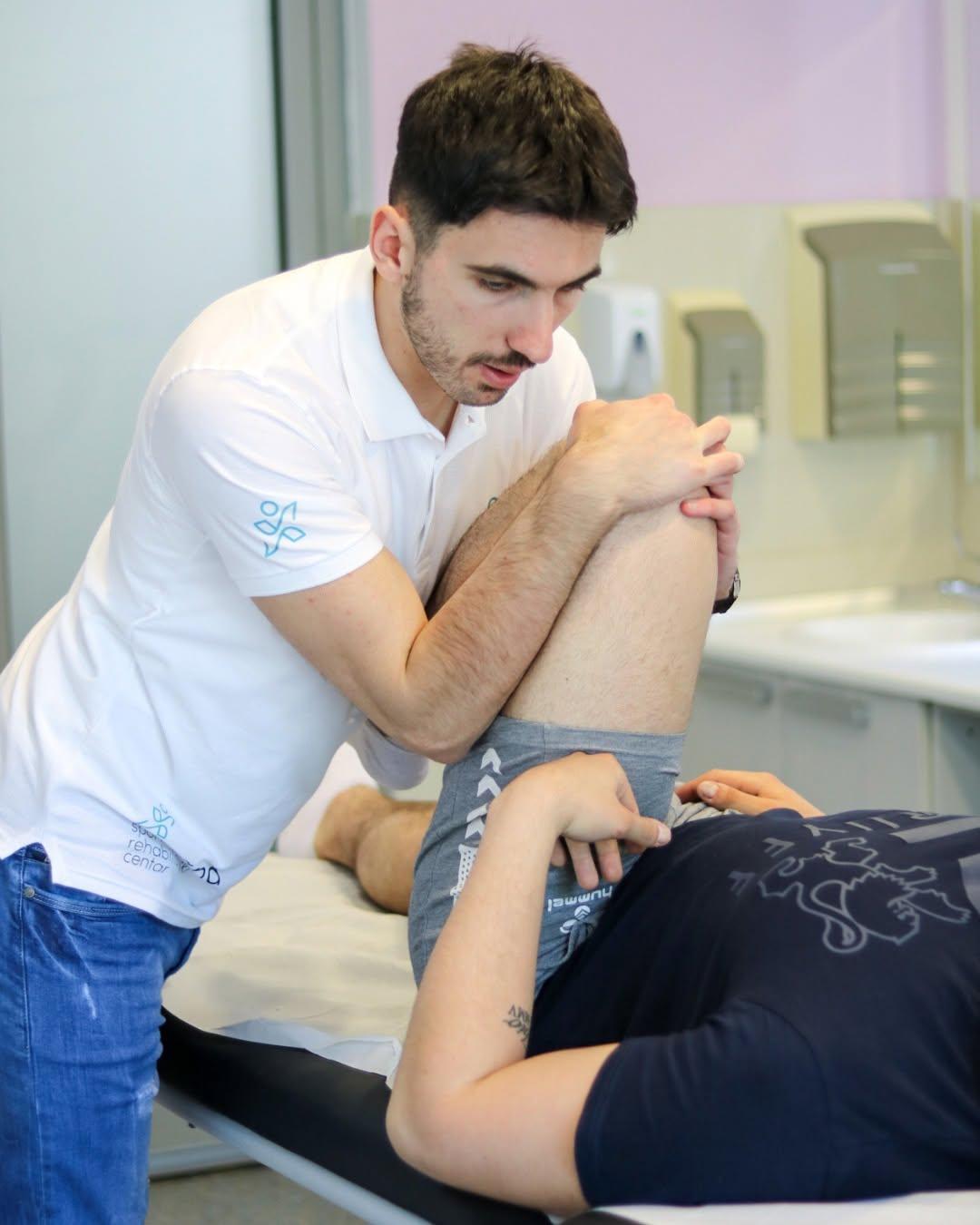
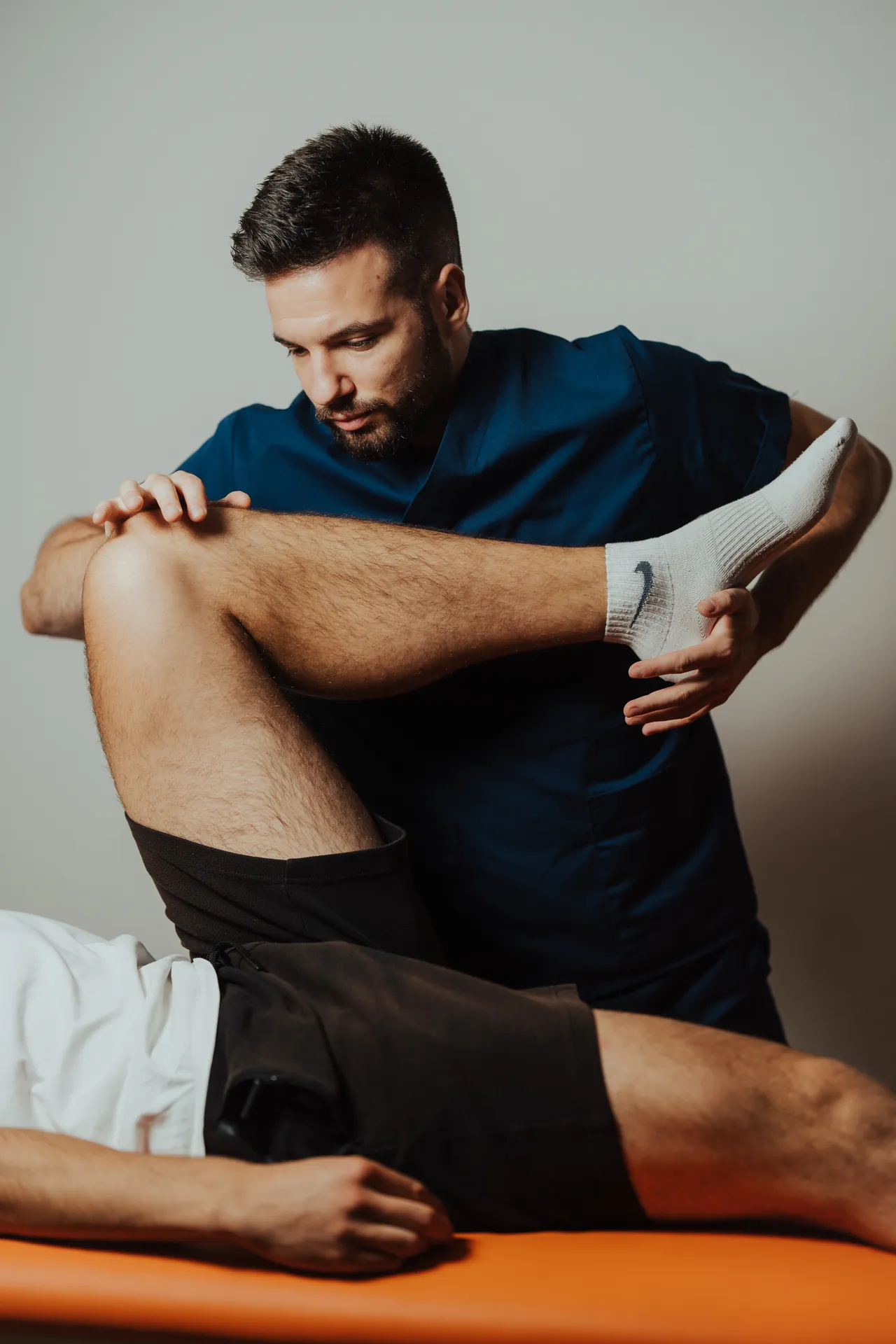
Franjo Keškić mobilising the flexed hip and knee of a patient lying on a treatment table
Franjo KeškićMSc Physiotherapy

Kaštel Sućurac, Croatia
Franjo Keškić

Founder, Fizio Centar Keškić, Kaštel Sućurac, Croatia

Around 10 years in practice. Franjo came into physiotherapy after his own football injury was misdiagnosed. That experience is why the first assessment and clinical reasoning sit at the centre of everything he teaches.

He has personally mentored 40+ students and physiotherapists through his 1:1 programme, and teaches anatomy and biomechanics as a guest lecturer at the Život Physiotherapy Academy.

  • ~10 years in practice
  • 40+ physios mentored 1:1
  • Guest lecturer, Život Academy
Kenan Gosto testing a patient’s hip in flexion on a treatment table
Kenan GostoMSc Physiotherapy

Mostar, Bosnia and Herzegovina

Kenan Gosto

Co-founder, Noxana physiotherapy and rehabilitation centre, Mostar, Bosnia and Herzegovina

Kenan has worked with elite athletes, including the Bosnia and Herzegovina national swimming team at European championships and European champion Lana Pudar. Alongside that, his daily caseload runs from recreational athletes to chronic pain patients.

He teaches colleagues and students through mentoring and practical workshops such as Physiotherapy 101.

  • BiH national swimming team
  • European champion Lana Pudar
  • Physiotherapy 101 workshops
“Find the cause of the dysfunction. Don't just treat the place that hurts.”

The First Assessment Checklist

Stop guessing in the first session.

Send it to my inbox

Free. Unsubscribe from our emails with one click, anytime. Privacy policy.